

In the tapestry of modern feminist thought, few figures stand as prominently as Fatima el Mernissi, the Moroccan sociologist, writer, and pioneer whose work challenged centuries-old norms and ignited discussions about gender, power, and Islam. Born in 1940 in Fez, Morocco, el Mernissi’s life and work were a courageous journey of questioning societal structures while rooting her arguments in the cultural and religious traditions of her world.
A Childhood Framed by Contradictions
Growing up in a harem in Fez, el Mernissi’s childhood was a mix of limitations and inspirations. She would later describe the harem as not merely a physical space but a metaphor for women’s restricted access to power and autonomy. However, this cloistered upbringing also instilled in her a love for storytelling and a desire to ask questions about the world beyond the walls.
In her memoir, “Dreams of Trespass: Tales of a Harem Girlhood,” she recounts how the women in her family—despite their confinement—exuded strength and resilience. Her grandmother Yasmina, in particular, had a profound influence on her worldview, often urging her to dream beyond boundaries. Yasmina’s words stayed with her:
“Life is all about borders. You can’t escape them. You just have to decide which ones are worth the fight.”
This wisdom fueled her later work as she delved into the societal “borders” that dictated gender roles.
Challenging the Male-Dominated Interpretation of Islam
Fatima el Mernissi’s scholarship often focused on dismantling patriarchal interpretations of Islamic teachings. In her book “The Veil and the Male Elite: A Feminist Interpretation of Women’s Rights in Islam”, she made a bold assertion: the marginalization of women in Muslim societies was not a reflection of Islamic values but rather the result of male-dominated cultural practices.
She was known for her incisive analysis of religious texts. For example, she challenged the historical validity of the Hadith that claims women’s leadership leads to failure:
“Those who entrust their affairs to a woman will never know prosperity.”
Through meticulous research, she revealed that this Hadith had questionable origins and was likely fabricated to support patriarchal systems. This act of reclaiming sacred texts not only sparked controversy but also empowered Muslim women to question narratives that confined them.
El Mernissi believed that Islam’s early history held feminist principles that were overlooked. She often cited Khadijah, the Prophet Muhammad’s first wife, as an example of an empowered Muslim woman. Khadijah was a wealthy merchant who proposed to Muhammad and was his confidante and partner—a dynamic that starkly contrasted with later restrictive views on women.
Anecdotes of Courage and Curiosity
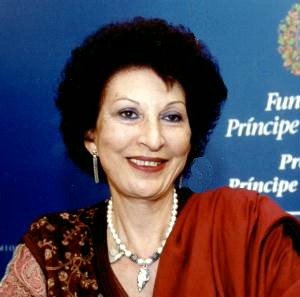
Fatima’s intellectual curiosity and boldness often placed her in contentious situations. In her academic circles and public debates, she encountered resistance from conservative scholars. In one memorable encounter, a critic questioned her authority to interpret religious texts as a woman. Her response was sharp and unwavering:
“If God gave women brains, how could He expect us not to use them?”
Her wit and determination to confront difficult topics with grace became hallmarks of her career.
Global Influence on Feminist Movements
Fatima el Mernissi’s work had a ripple effect on feminist movements, both in the Arab world and globally. By challenging patriarchal norms from within Islamic traditions, she provided a powerful framework for women across diverse cultures to reclaim their agency.
In North Africa and the Middle East, her writings inspired activists to call for reforms in areas such as family law, education, and workplace equality. She also highlighted the need for economic independence, stating:
“The key to a woman’s freedom is financial autonomy. Without it, dreams remain dreams.”
El Mernissi’s influence extended beyond academia to grassroots movements, where her ideas were used to support campaigns for gender equality in traditionally conservative societies. Her ability to connect the past with the present gave feminists a sense of historical continuity, proving that their fight for justice wasn’t a foreign import but deeply rooted in their own cultures.
Her works were also embraced by feminists in the West, who saw her as a bridge between Islamic and Western thought. She challenged stereotypes about Muslim women, showing that they were neither voiceless victims nor a monolithic group.
Recognitions and Honors
Fatima el Mernissi’s contributions were recognized globally. She received numerous accolades, including the Prince of Asturias Award in 2003, one of Spain’s most prestigious honors, for her efforts to foster dialogue between Islamic and Western cultures. The award committee praised her as “a builder of bridges between worlds.”
Her books, translated into multiple languages, brought her ideas to a worldwide audience, making her one of the most influential feminist thinkers of the 20th century.
A Legacy That Lives On
Fatima el Mernissi passed away in 2015, but her legacy continues to inspire feminists, scholars, and activists globally. By centering her arguments within Islamic traditions, she bridged the gap between modern feminist ideals and the cultural realities of the Arab world.
Her life was a testament to the belief that change begins with questioning the status quo, and her writings are a reminder that feminism is not a borrowed concept but a universal call for justice.
Perhaps her most poignant reflection captures the spirit of her mission:
“The real struggle is not between men and women, but between tradition and change.”