

Lubna of Córdoba, a remarkable figure of the 10th century, stands as a testament to the rich intellectual and cultural legacy of Al-Andalus, the Muslim-ruled region of Spain. A scholar, poet, and scribe, Lubna rose to prominence during the reign of the Umayyad caliphs, contributing significantly to the flourishing intellectual environment of Córdoba, often referred to as a “jewel of the world” in her time. Her life and achievements reflect the era’s commitment to knowledge, learning, and gender inclusivity in scholarly pursuits.
A Life Dedicated to Learning and Scholarship
Born in the 10th century, Lubna was likely of humble origins, and some accounts suggest she was initially a slave. Her talents, however, could not be ignored. Gifted with a sharp intellect and a profound love for learning, Lubna mastered a range of disciplines, including mathematics, astronomy, and poetry. Her exceptional skills earned her a position in the court of Caliph Abd al-Rahman III (r. 912–961) and later under his successor, Al-Hakam II (r.
961–976), who were both great patrons of knowledge and education.
Lubna’s primary role at the court was as a scribe and secretary, but her contributions went far beyond mere transcription. She became renowned for her expertise in calligraphy, her ability to compose poetry, and her mastery of languages. She was entrusted with managing important correspondence, drafting official documents, and overseeing the copying of manuscripts for the royal library.
The Royal Library of Córdoba
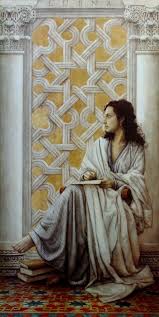
One of Lubna’s most significant achievements was her involvement in the establishment and organization of the Royal Library of Córdoba, one of the largest and most prestigious libraries of its time. Under Caliph Al-Hakam II, the library housed a staggering collection of approximately 400,000 manuscripts, covering topics ranging from philosophy and science to literature and theology. Lubna played a pivotal role in expanding this collection, supervising the transcription of rare works, and corresponding with scholars across the Islamic world to acquire new texts.
Her contributions to the library not only enriched the intellectual climate of Al-Andalus but also ensured that Córdoba became a beacon of knowledge, attracting scholars and students from across Europe, North Africa, and the Middle East.
A Champion of Women’s Education
Lubna’s success in a predominantly male-dominated sphere highlights the progressive attitudes toward education in Al-Andalus. Women in the Islamic Golden Age were often encouraged to pursue knowledge, and Lubna’s accomplishments inspired many other women to follow in her footsteps. Alongside other prominent female scholars of her time, she shattered societal expectations and demonstrated that intellectual excellence was not bound by gender.
Her legacy as a scholar and mentor extended beyond her lifetime, leaving an indelible mark on the history of women’s education. In the courtly and scholarly circles of Córdoba, Lubna’s name was revered as a symbol of excellence and erudition.
A Legacy of Inspiration
Lubna of Córdoba’s story is one of resilience, brilliance, and dedication. Her work as a scholar, scribe, and librarian played a crucial role in preserving and disseminating knowledge during a period of cultural and intellectual flourishing. More importantly, her legacy serves as an enduring reminder of the contributions of women in the advancement of human civilization.
In modern times, Lubna’s life continues to inspire scholars, educators, and advocates for gender equality. Her story is a powerful testament to the transformative power of education and the enduring impact of those who dedicate themselves to the pursuit of knowledge.
Lubna of Córdoba is more than just a historical figure; she is a beacon of the rich intellectual traditions of Al-Andalus and a symbol of what can be achieved through passion, perseverance, and an unyielding commitment to learning.
Historical Reflections on Lubna:
While specific phrases about her are rare, descriptions of her talents survive in historical accounts, emphasizing her intellectual prowess and her role at the court of Córdoba.
Chroniclers have praised her for:
Her mastery of mathematics and calligraphy: Lubna was noted as a leading figure in her field, described as excelling beyond many of her male peers.
Her contributions to knowledge: She was remembered as a “shining light” in the intellectual court of Al-Andalus.
For example, some accounts suggest that Lubna was referred to as someone who “devoted her life to wisdom and knowledge,” though these are paraphrased from interpretations of historical texts rather than verbatim quotes.
Contextual Quotes About the Period
Lubna, her story is embedded in the broader intellectual environment of Al-Andalus. Here are a few relevant reflections from the Islamic Golden Age that resonate with her achievements:
“The ink of the scholar is more sacred than the blood of the martyr.”
A well-known saying in Islamic tradition that highlights the immense value placed on knowledge and learning, which Lubna exemplified in her life.
“Seek knowledge from the cradle to the grave.”
Another famous Islamic adage that aligns with Lubna’s lifelong pursuit of intellectual growth.
“When the mind is enlightened, the soul shines.”
This sentiment, though more broadly reflective of Andalusian culture, captures the spirit of Lubna’s contributions.